Problem
Employees don’t get 1-on-1 time with customers very often, which sometimes causes them to lose sight of the customer perspective. This is problematic because we need to understand how customers think, feel, and behave to be able to solve their problems in an effective way.
Solution
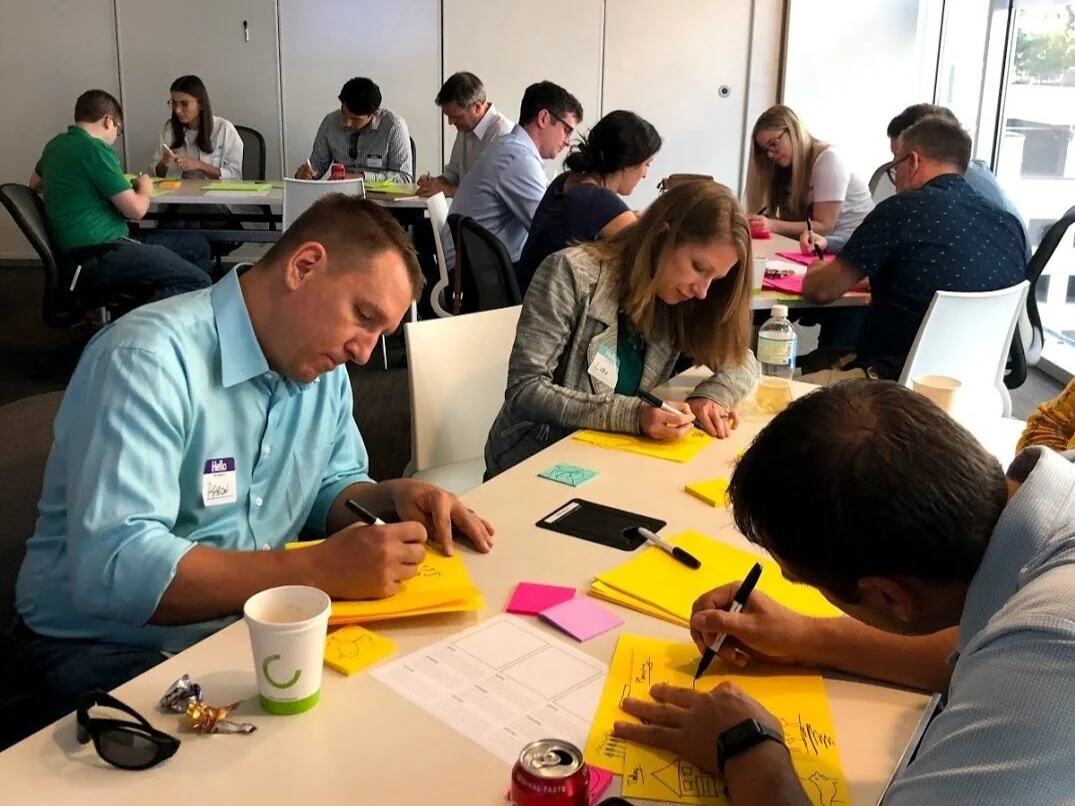
I organized a continuous workshop series at both TIAA and Ally where customers and employees came together to discuss core issues in their financial lives.
Use Case & Process
STAKEHOLDER interviews
I started the process of planning for the Coffee with Customers event by holding some stakeholder interviews to understand what everyone wanted to get out of the session.
We decided that the main goal should be to give employees time to talk to customers and empathize with them on a personal level. We also wanted to capture any insights based on the topics covered to report out to those that could not attend. This was also the first time that we were doing this type of engagement, so we really wanted to learn what a good template and cadence for these types of activities would be.
Recruiting
After discussing with some stakeholders, we landed on recruiting customers with at least a checking or savings account with us and mixed demographics (age, gender, HHI, etc.). The recruitment of the customers was meant to be broad so we could get a variety of participants.
To recruit employees for the event, I simply sent an email to the digital group to gauge their interest in participating. There were quite a few responses, so I decided to be selective and choose employees from varying roles within the final group. 10 employees were chosen to participate and I had 3 volunteers from my research team to help with the logistics of the event the day of.
Employee Workshop
After recruiting some interested employees, I invited them to a workshop where we brainstormed different topics they wanted to learn about for the session and created an affinity map of the topics they came up with. From the affinity map, I was able to come up with overarching themes that we would then talk about with customers when they came in for the session.
Activities/AGenda
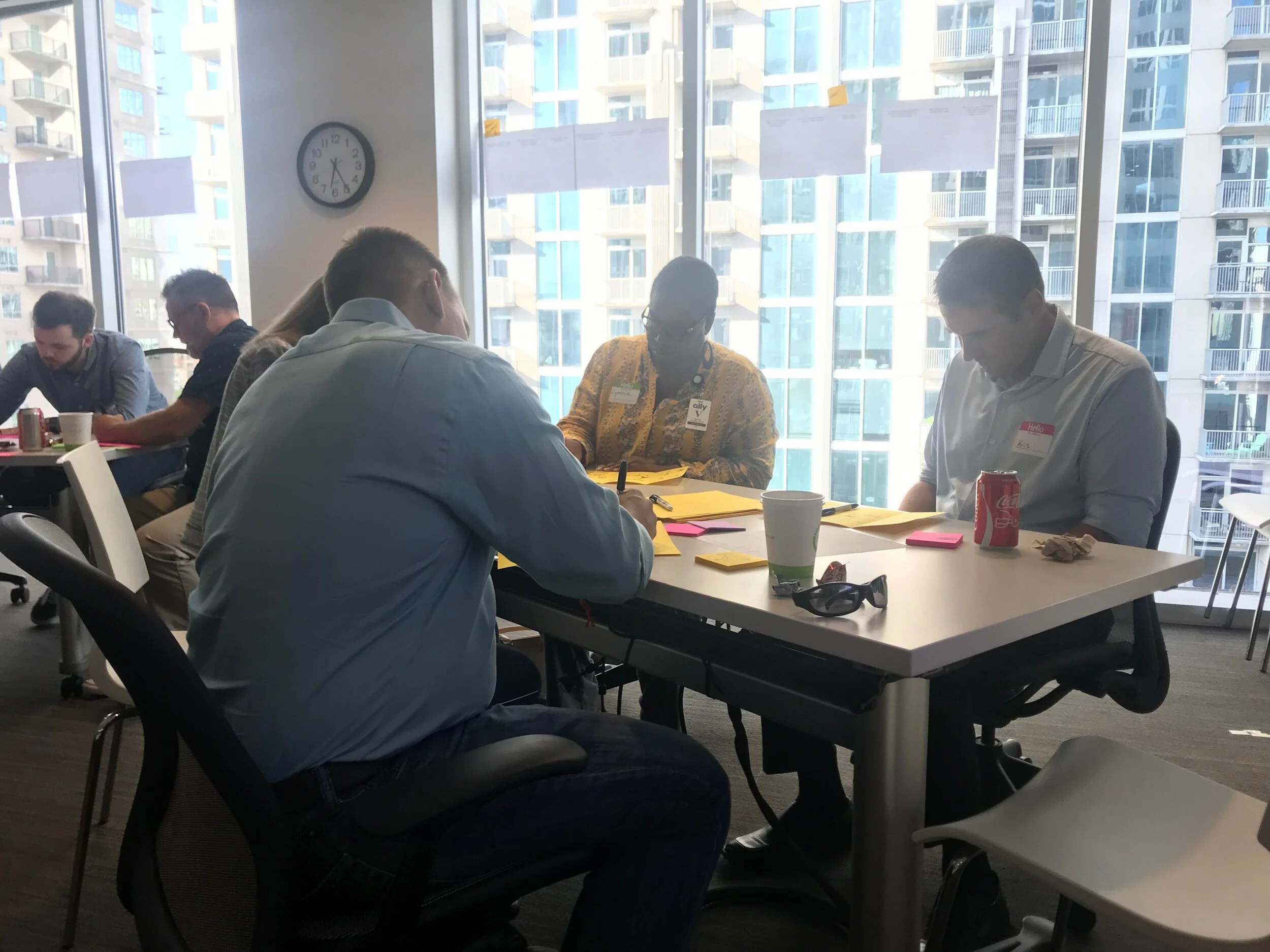
After the employee workshop, I spent some time coming up with questions as prompts for discussion amongst the group for each topic and planned a surprise activity to learn more about our participant’s most impactful money moments. Once the activities were finalized. I created the agenda with time increments to make sure we could do everything in the time allotted.
Other Planning
Then came planning all the other stuff like…
Room - I needed a big enough space for people to be able to divide into groups and move around a bit. It took booking the largest room in the building.
Room setup - I wanted to have everyone set up in small groups to keep everyone engaged and for everyone to get a chance to share their money memory journeys, without eating up too much time, so I created 5 group stations in the room. I also aligned the materials for the topic open discussion within each station.
Food - I needed snacks and drinks for 30 people to be provided the day of the event
Goodie bags - As a thank you, I organized Ally swag goodie bags for customers to take away with their incentives
Volunteers - I needed volunteers to help escort people to the right place once they checked in and signed their NDAs, so I enlisted some help from my teammates
Reminders - Although, the details about the event and agenda had been communicated to employees multiple times, I sent a last reminder email with all the details and made sure everyone confirmed their participation.
The Event
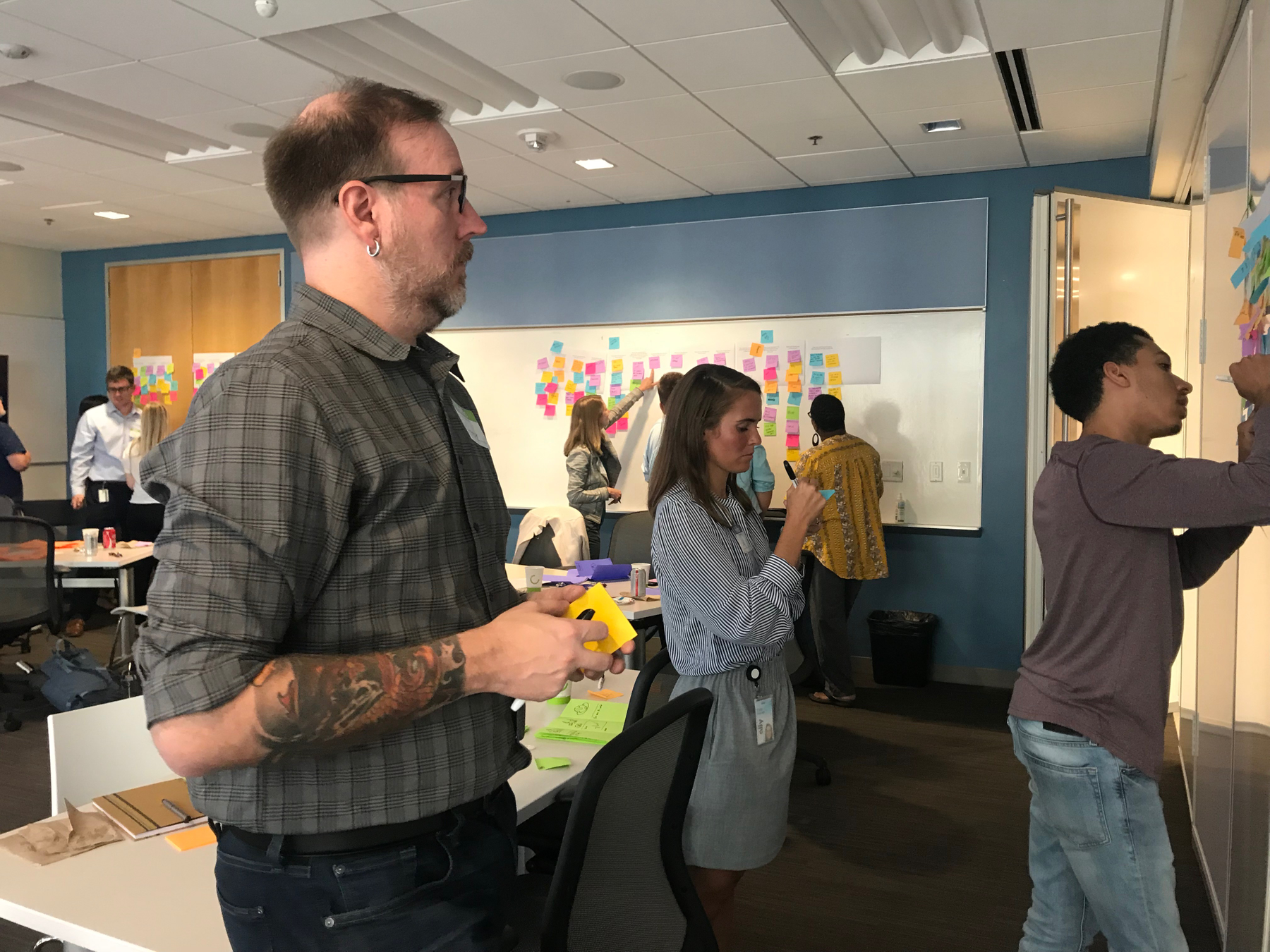
The day of the event was a whirlwind of coordination, getting the volunteers where they needed to be with the right instructions for what to do, getting the employees where they needed to be with instructions on what to do, setting up the room, setting up the snack table, making sure the goodie bags had what they needed, but in the end it was all worth it.
Once everything was in place all the customers started to filter in, where they spent the first 15 minutes just getting to know some of the employees. This was helpful in making everyone more comfortable and talking. When the 15 minutes was up, I started filtering everyone into the room and their assigned stations to start the session.
I gave a short introduction who I was, my role as facilitator, why we asked people to come in and what we were going to use the feedback that they give for, to ground everyone in our goals. I also did a quick overview of the agenda and then hopped right into the first activity, Squiggle Birds.
Squiggle Birds
If you’ve never used the activity Squiggle Birds as an icebreaker, you should definitely try it. All you need is paper and pens for everyone participating. The primary goal with this icebreaker was to get people drawing before diving into the money memory journeys.
All you do as a facilitator is ask everyone to make a bunch of squiggles on their piece of paper. Then you show them that you can make a bird out of any squiggle by adding a triangle for a nose, a circle for an eye, sticks for legs and a rectangle tale. Once you’ve shown your example, you challenge the group to make birds out of all the squiggles they made, then share it with the other team members. At the end you explain that this proves that anyone can draw. If you can make a bird out of a squiggle, you can draw anything using basic shapes. It’s also important to communicate the importance of visuals when it comes to memory and communication, so they understand why a drawing is essential, even if you’re not a Da Vinci.
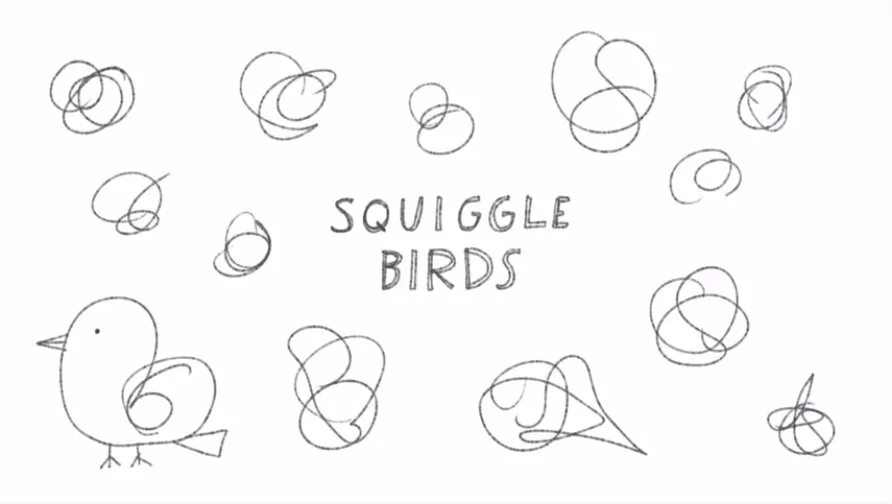
Here’s an example of what a squiggle bird looks like. If you want to check out a video of how this works you can visit David Gray’s youtube video.
Money Memory Journeys
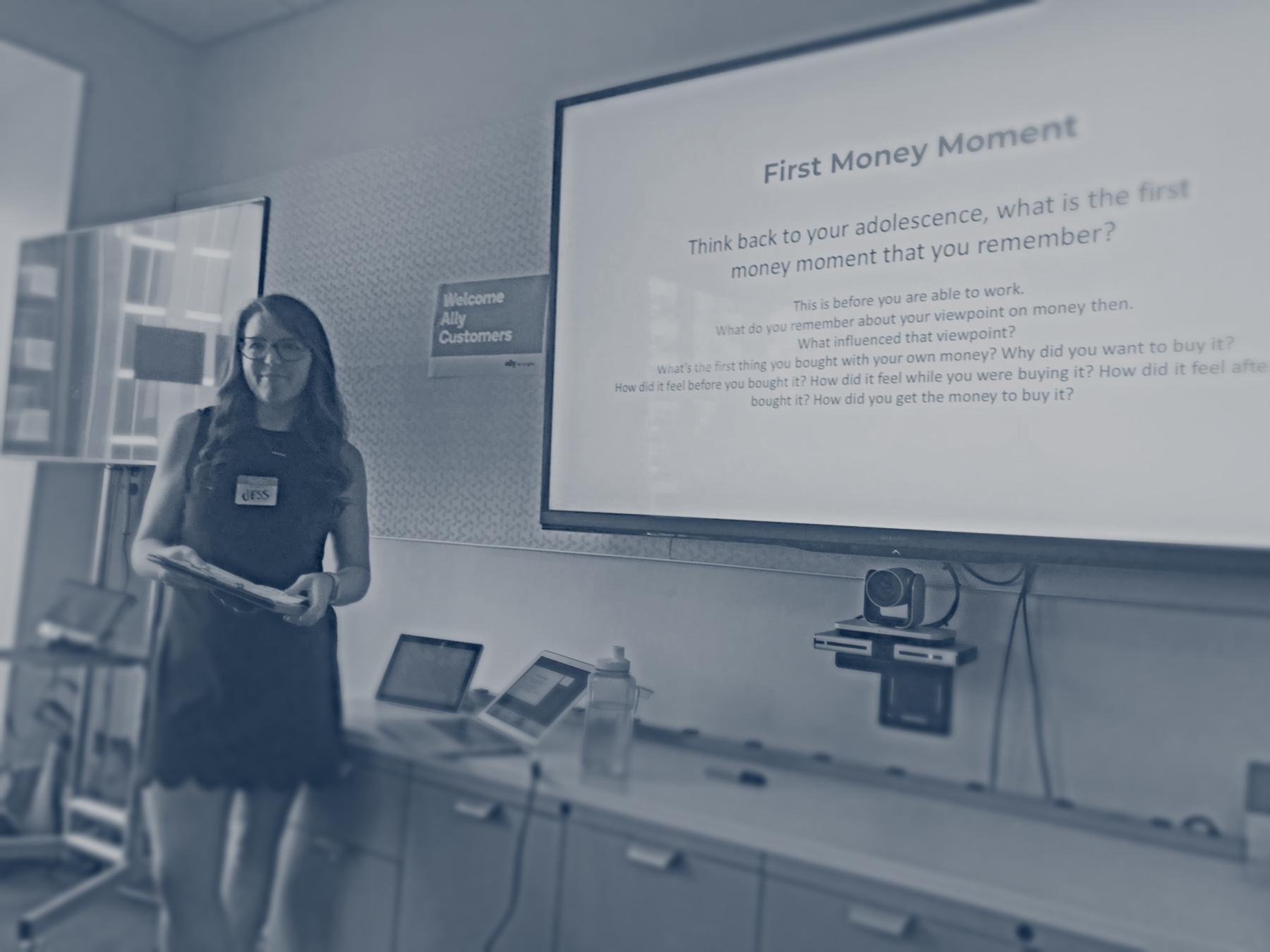
After the icebreaker we moved into the money memory journeys activity, which was something that I came up with out of curiosity. I wanted to understand how people viewed money at different stages of their life and see if there was a pattern in the moments they described as most memorable.
To start the activity I told everyone we were going to explore money memories from the past to the present. I was going to give them a prompt and I wanted them to think back to the most vivid memory they had around that prompt. Once they had a memory in mind, I wanted them to draw out a 3 panel storyboard describing the events that took place during that memory, what were they feeling, thinking, doing. Then I showed them an example of what journey might look like with my own example of my first major injury memory to help them understand what I was looking for.
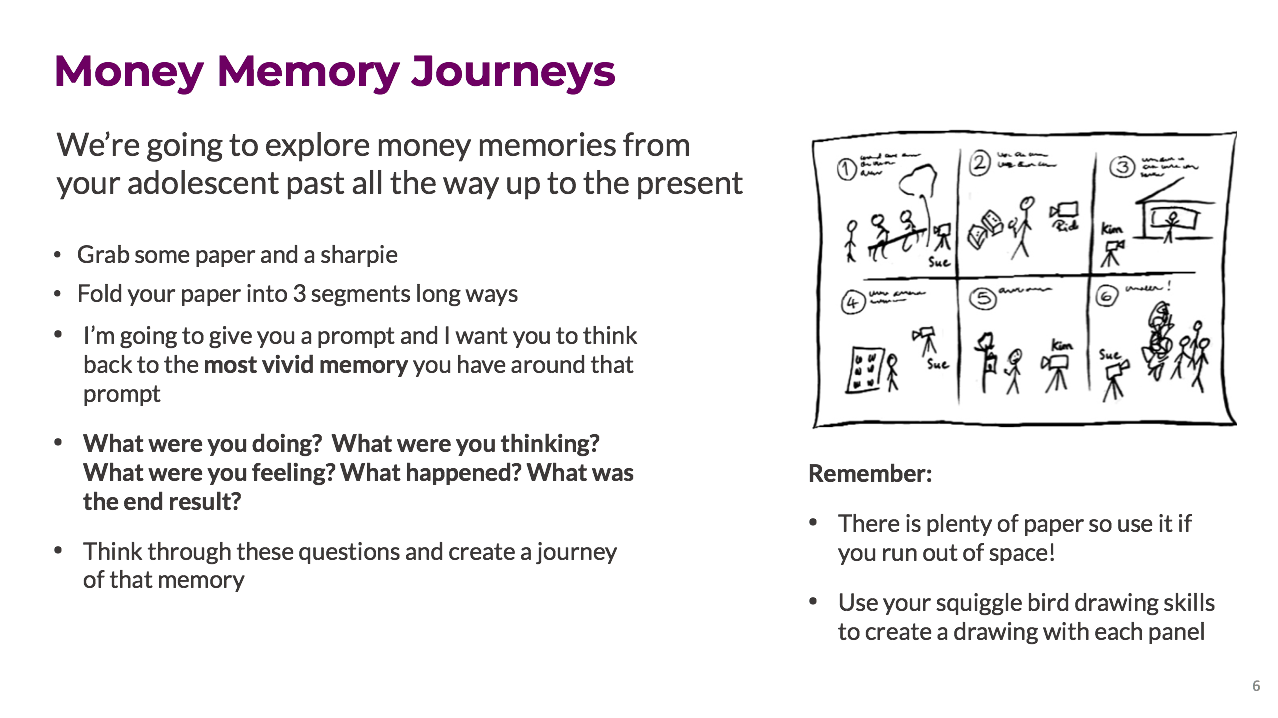
This is the slide I used in the session to help people understand and remember the instructions for the money memory activity.
The prompts I gave for the journeys were…
First money moment
First paycheck
First major purchase
Where are you today and what is on the horizon
After I gave each prompt, I gave everyone time to create their journey and share with their small group. This happened to be one of the most engaging parts of the session. It was interesting hearing the stories that people had and how early experiences shaped their views of money throughout their lives. It created a lot of good, open conversations and was a great way for people to get to know each other quickly.
Once we went through the money memory prompts, as a larger group, we discussed themes or patterns that we saw within the journeys or most memorable moments and documented them for later use.
Next we moved into the open topic discussion.
Open Topic Discussion
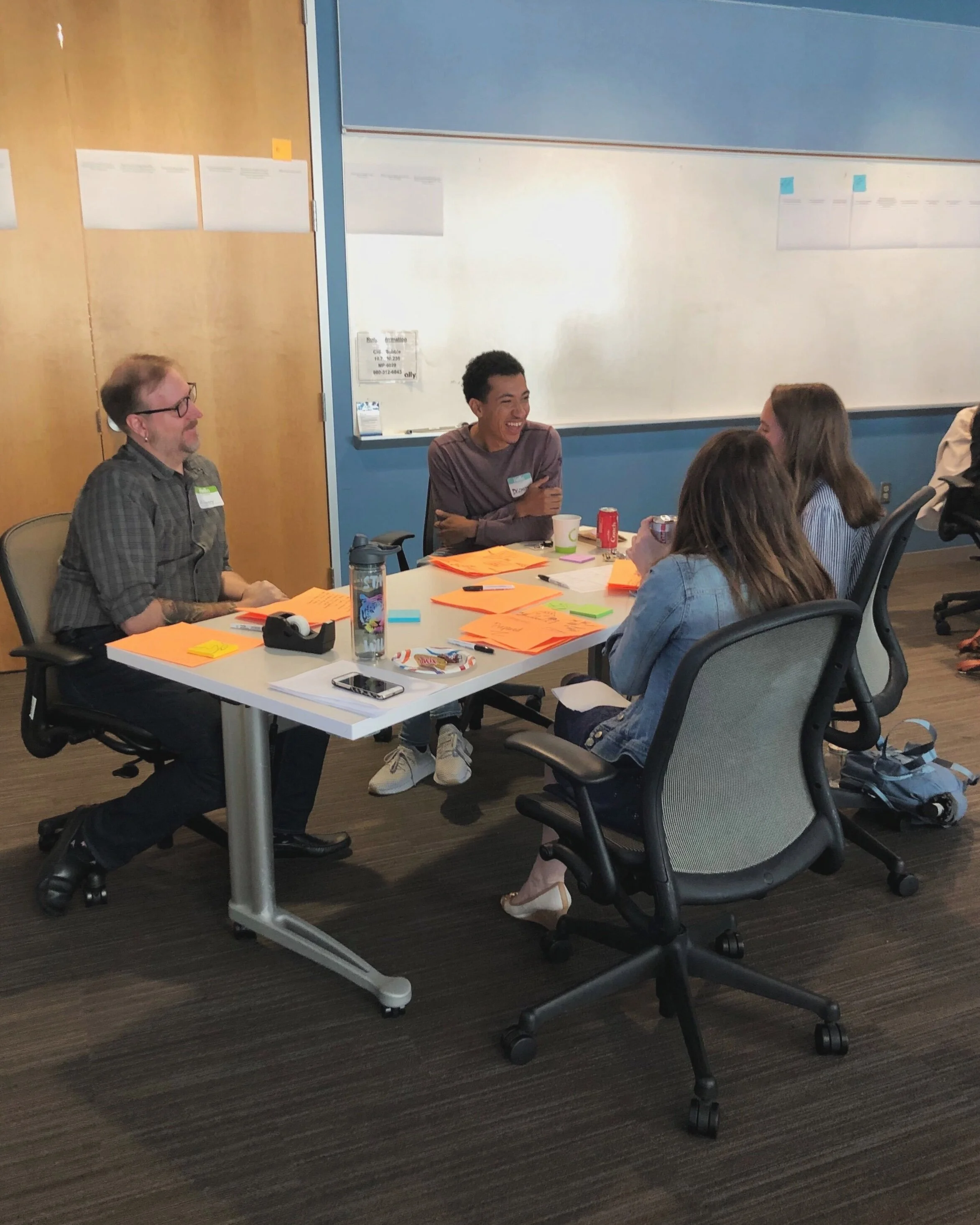
I had everyone stay in their groups for the topic discussion. At each group there was a topic or two that the collective group of employees wanted to learn about. I asked the groups to talk about each topic and use the script of questions I spent time creating before the session to help guide the conversation. The point was not for employees to follow the script, but to have it as a resource if they ran out of questions around the topic.
Each group spent 5 minutes discussing the topics at each station then I had them rotate around the room to a different topic station, until they went through all the topics. At the end, I had everyone affinity map the responses at the topic station they finished at so they could share any themes with the larger group.
There was a lot of great dialog with the larger group on themes we saw like…
Saving for the future and paying down debt being a primary focus
Most felt like they were living within their means
Most had trouble sticking to a budget - more from an accountability perspective
Some wished they knew more about investing
Most wanted transfers to be instant
Most disliked switching between vendors for person to person payments
Few people had a financial advisor - some felt like it was out of reach
Online security isn’t always top of mind, but is something people do worry about and feel like they have very little control over
Customers are weary of AI technology and smart devices like the Alexa, because they do not fully understand their capabilities
After the group discussion, we ended the session by thanking them for coming and sent them off with their incentives for participating and goodie bags.
Report out and Retro
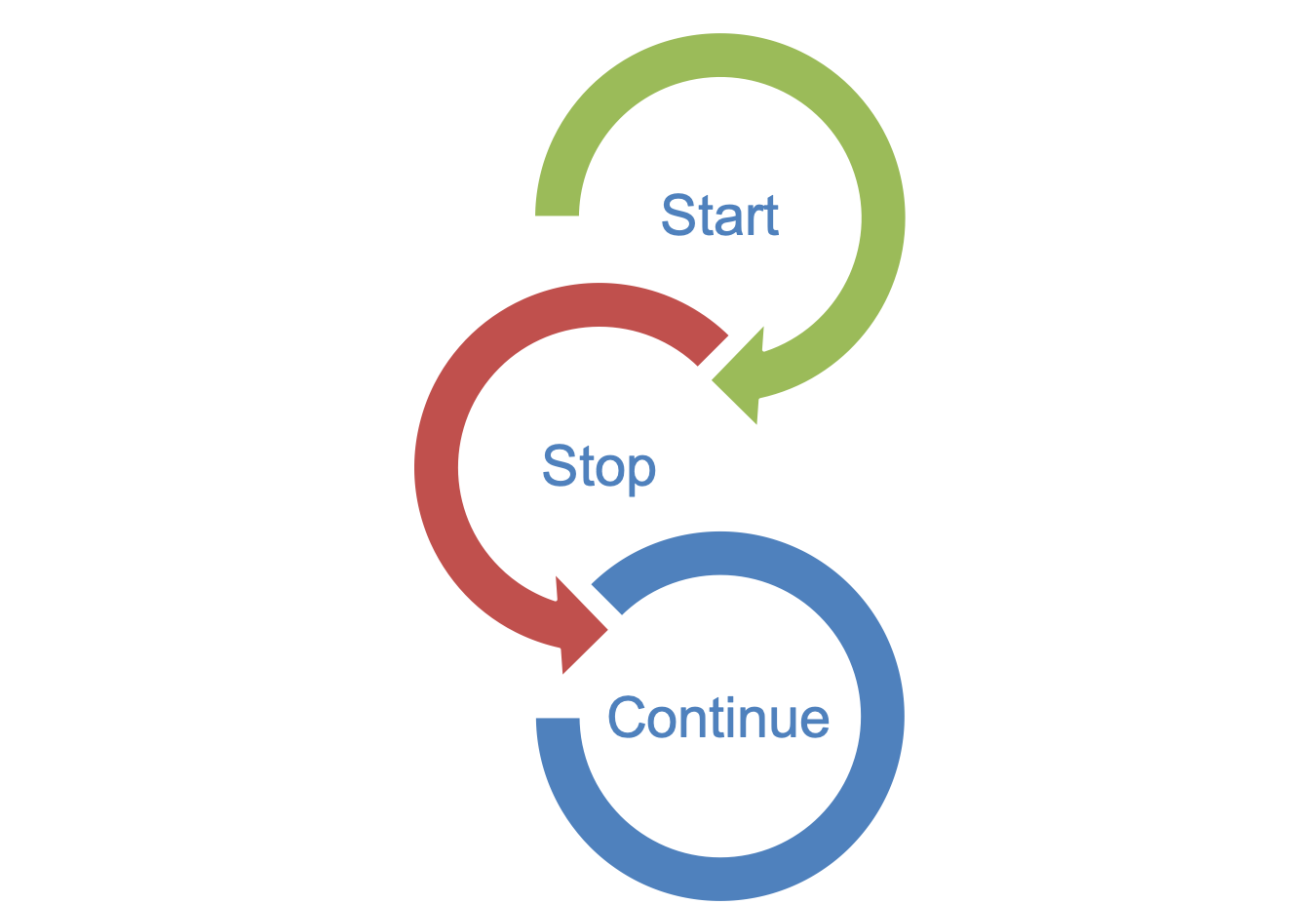
After the session, I scheduled a report out and retrospective for the event. In the report out, I summarized some of the key insights from the session and started the discussion for the retrospective on the session itself.
Start
We learned some key things from the pilot we wanted to start doing, like, making sure we mark the name tags of employees as employees. Some people were getting confused whether they were talking to an employee or customer. Exit surveys were also something we wanted to start doing to get more feedback from customers on how the session went. With the topic discussions, we realized there were too many topics and we would limit to five main topics in the next session.
Stop
We wanted to stop doing debriefs with customers in the room so that there could be more time for open conversation.
Continue
We primarily wanted to continue to give gift bags with swag, mingle at the beginning, and find ways to bring out customer stories (money memory journeys).
Outcome
This “Coffee with Customers” event was a major success! Employees got a chance to hear directly from customers what they thought about the topics they were interested in and we left with some interesting insights. This pilot also helped our team understand how we could hold these events in the future and gave us a template to iterate off of. Coffee with Customers is now a continuous event that we hold every quarter. My team thankfully shares the work of putting these together because they do require a lot of planning and coordination. I’m excited to see what comes out of these sessions going forward. I’m sure they will only get better and better as we iterate.